
Technical decision behind the topic
modular home maintenance affects far more than appearance. In a modular home, technical choices influence factory production, lifting, transport, thermal bridges, acoustic comfort, moisture protection and maintenance. Alpina, Mantra and Magnum show different demands because compact cabins, family homes and premium facades do not fail in the same way.
From detail to operation
A good detail is one that can be manufactured consistently, transported safely and serviced years later.
Performance and durability
For all QHOME models, durability should be read through the local climate: wind, sun, salt, snow, humidity, freeze-thaw cycles and shade. Lumen may need a different shading and service logic from Alpina, while a QBBQ module must resist outdoor service conditions.
Ask for technical clarity
Buyers should request specification, dimensions, lifting assumptions, utility points, finish options and maintenance expectations before final approval.
Practical buyer scenario
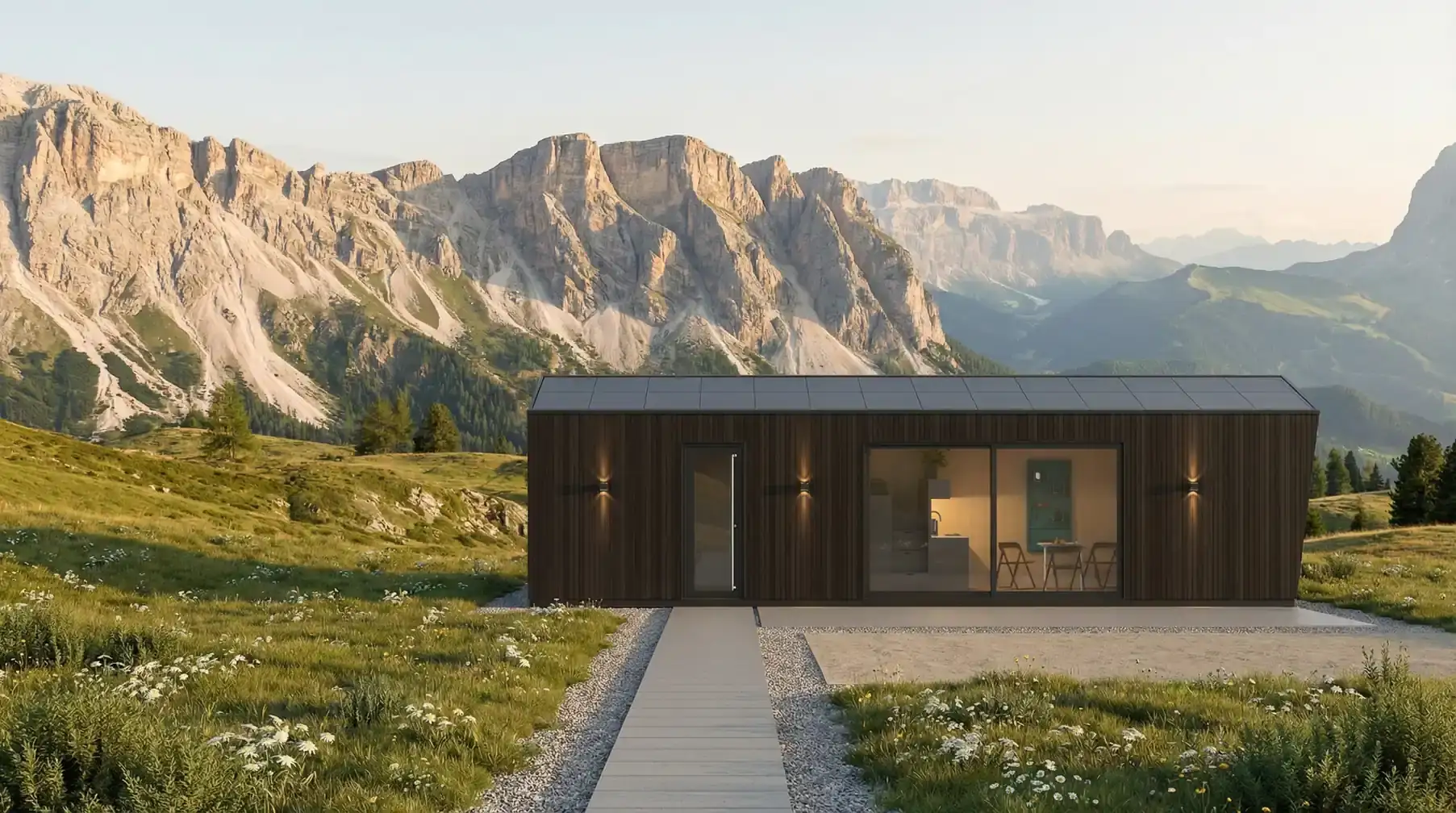
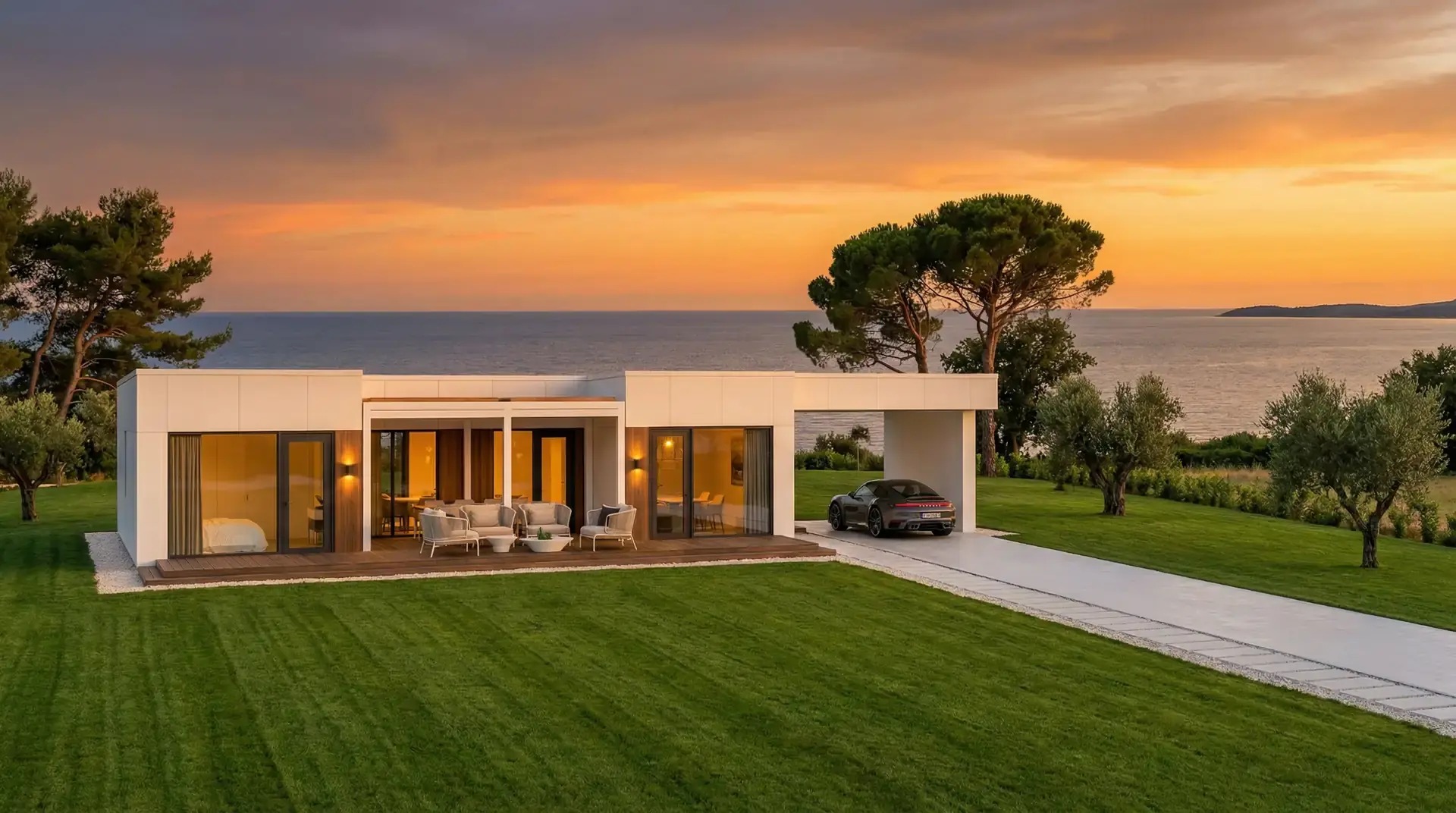
A buyer comparing Alpina and Mantra should not only ask which looks better. The better choice is the one whose envelope, window area, facade maintenance and installation method match the exact site.
Technical due diligence workflow
Technical due diligence should move from outside to inside. Start with transport dimensions and lifting assumptions, then review structure, envelope, windows, facade, roof, penetrations, insulation, vapor control, ventilation and access to service zones. Finally, ask what a technician will need to reach after five years of use.
For a model such as Alpina, the visible design must be matched by a practical maintenance plan. For compact hospitality models such as Mantra, details are under heavier turnover pressure because guests use the same surfaces intensively.
Technical comparison
The table below gives a practical comparison lens for this topic. It is not a substitute for a site-specific quote, but it helps frame the first conversation.
| QHOME model | Technical lens | Why it matters | Area |
|---|---|---|---|
| Alpina | structure and transport | turnkey micro-chalet for glamping and hotel-room use with panoramic lounge and GearBox | 29.11 mВІ |
| Mantra | envelope and insulation | premium single-storey family home with covered terrace and integrated one-car carport | 104 mВІ |
| Magnum | glazing and shading | revenue-ready modular home with panoramic end glazing and autonomous systems | 52.54 mВІ |
| Lumen | service access | restrained modular solution with timber slats, fiber-cement panels and efficient permanent-living layout | 90.19 mВІ |
Common mistake
The common mistake is treating materials as a moodboard. In modular construction the facade, structure, insulation, joints, lifting points and transport route are connected. A detail that looks simple on Alpina must still survive transport, lifting, weather exposure and maintenance.
QHOME-specific recommendation
For this topic, QHOME models should be compared by scenario rather than by size alone. The right unit is the one that reduces project risk and matches daily use.
- Alpina — 29.11 m², from €59,800; best fit: turnkey micro-chalet for glamping and hotel-room use with panoramic lounge and GearBox.
- Mantra — 104 m², from €64,200; best fit: premium single-storey family home with covered terrace and integrated one-car carport.
- Magnum — 52.54 m², from €26,910; best fit: revenue-ready modular home with panoramic end glazing and autonomous systems.
- Lumen — 90.19 m², from €54,110; best fit: restrained modular solution with timber slats, fiber-cement panels and efficient permanent-living layout.
- QBBQ — 7.2 m², from €10,000; best fit: premium outdoor kitchen for terraces, villas, restaurants, campsites and hospitality projects.
Decision checklist
- check transport size before approving architectural details
- specify envelope, windows and ventilation as one system
- protect timber, metal and façade joints from local moisture conditions
- make maintenance access visible in drawings
- ask for the delivery and lifting method before final specification
Questions to ask before the quote
- Which QHOME models should be compared for modular home maintenance, and why?
- What is included in the starting price, and what is project-specific?
- What site information is required before a reliable offer?
- Which utilities, smart systems and outdoor additions should be planned now?
- What assumptions could change delivery, installation or operating cost?
Reference notes
- QHOME.EU catalog — Product categories, areas, price ranges and scenarios.
- Mordor Intelligence — Europe Prefabricated Housing Market — European prefab housing market sizing and growth context.
Frontier technology upgrades for modular home maintenance in 2026
The newest and most interesting technologies for modular home maintenance should be presented in three levels: available now, premium or limited, and watchlist. This keeps the article exciting without promising systems that are not yet bankable, serviceable or legal in the target country.
A private buyer can treat frontier technology as a staged roadmap: prepare solar, conduit, monitoring and service space now, then add premium equipment when the supplier, warranty and local rules are clear.
What is worth mentioning now
| Technology | 2026 status | Why it is exciting | Main caution | QHOME fit |
|---|---|---|---|---|
| Matter + Thread smart home backbone Matter smart home modular home | available / practical premium | Matter and Thread make smart modular homes easier to integrate across ecosystems instead of locking every device into one vendor stack. | not every device category is equally mature | Mantra, Lumen, Alpina, Delta |
| Edge AI occupancy and energy control edge AI modular home | premium / software-led | Edge AI can reduce cloud dependence and respond locally to occupancy, climate and equipment data, improving privacy and resilience. | bad commissioning can irritate guests | Alpina, Mantra, Lumen, Delta |
| Digital twin and equipment passport digital twin modular home | premium / delivery-ready | A useful digital twin is not a 3D toy; it is a service record containing equipment, serial numbers, warranties, maintenance intervals and QR codes. | requires data discipline | Mantra, Lumen, Delta, Magnum |
| PMS-connected smart room with offline fallback PMS smart lock modular hotel room | available / hospitality premium | A modular hotel room becomes operationally serious when smart locks, PMS, cleaning status, climate setback and offline access all work together. | lockouts damage reputation quickly | Alpina, Delta, Magnum, QBBQ |
| Predictive maintenance dashboard predictive maintenance modular home | available / operations-led | Predictive maintenance connects water, HVAC, battery, access and IAQ data so operators fix issues before guests complain. | alerts without responsibility become noise | Delta, Alpina, QBBQ, Mantra |
Do not oversell the future
The safest editorial rule: if a technology is a pilot, lab record or infrastructure concept, describe it as a watchlist option. Do not put it into a buyer checklist until the supplier, warranty, installation route and local approval are clear.
- Matter + Thread smart home backbone: Buying random smart devices that cannot talk to each other or be maintained.
- Edge AI occupancy and energy control: Automating comfort so aggressively that guests or residents feel controlled.
- Digital twin and equipment passport: Calling any render or floor plan a digital twin.
Decision checkpoints before adding frontier tech to a quote
- Matter + Thread smart home backbone: Choose Matter/Thread-compatible devices where possible and document the network.
- Edge AI occupancy and energy control: Use AI to assist comfort and maintenance, with manual override always available.
- Digital twin and equipment passport: Build the twin around maintenance and asset data, not only visualization.
- PMS-connected smart room with offline fallback: Map guest journey and staff journey before selecting lock hardware.
- Separate “available now” items from “future-ready” preparation in the article and in the commercial conversation.
- Confirm local installer availability, service response time and warranty transfer before recommending the system to a private buyer or hospitality operator.
QHOME-specific recommendation
Design scenario: for panoramic units such as Zephyr or larger lifestyle homes such as Mantra, invest first in shading, ventilation, glazing strategy and thin high-performance envelope details. These are more visible to comfort than exotic equipment hidden in a brochure.
Reference signals behind this 2026 technology layer
- Connectivity Standards Alliance — Matter
- The Verge — Matter 1.4.1 setup improvements
- IEA Global Energy Review 2026 — Battery storage
- European Commission — Energy Performance of Buildings Directive
- European Commission — Circular systems can drive reductions in city freshwater use
FAQ
What should I check first in modular home maintenance?
Check how the decision affects transport, structure, moisture, thermal bridges, fire/acoustics, maintenance and the climate of the site.
Which QHOME models are good technical references?
Alpina, Mantra and Magnum show different engineering constraints: compact hospitality, larger family use and exterior performance.
Are all modular homes built the same way?
No. Structure, facade, insulation, windows, service access and factory readiness vary by model and supplier. Ask for technical drawings and specification details.
What is more important: facade or insulation?
Both matter. The facade protects the envelope, while insulation and airtightness define comfort and energy use. They should be designed together.
Can technical upgrades improve rental income?
Yes, when they improve comfort, reduce downtime or create better guest reviews. But upgrades must be tied to the business case, not selected randomly.