
Guest promise and business model
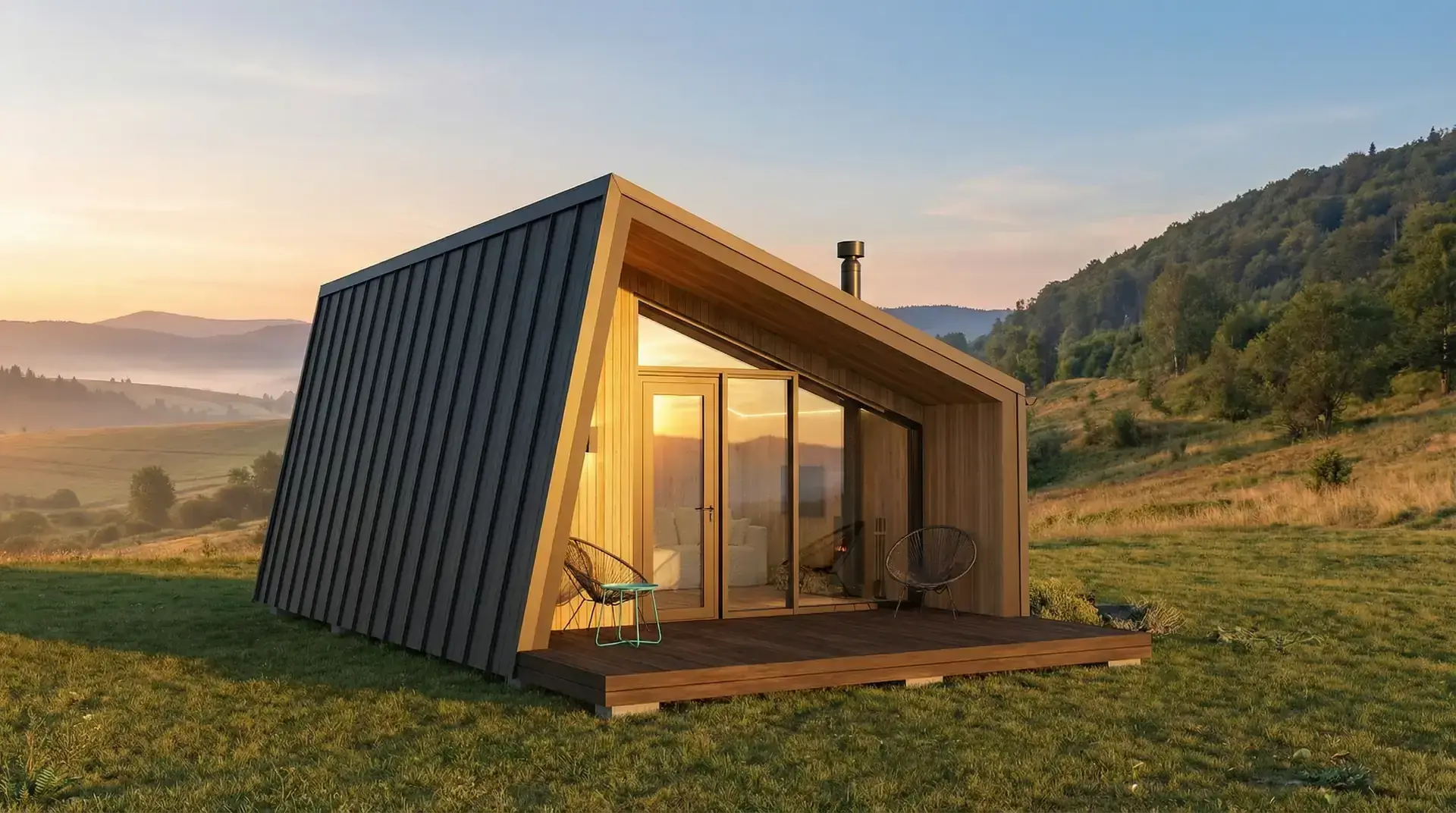
modular homes for seaside camping starts with a promise to the guest. Is the stay about a mountain view, a quiet forest retreat, a wine weekend, a pool terrace or a family nature break? A room mix based on Delta, Sofia and Mantra can support different price levels and stay lengths, while Swift adds a food and atmosphere layer.
Why modular changes the launch logic
Factory production allows the operator to prepare land, brand, booking pages and service procedures while units are being produced. That parallel workflow can protect the opening season.
Room mix and site operation
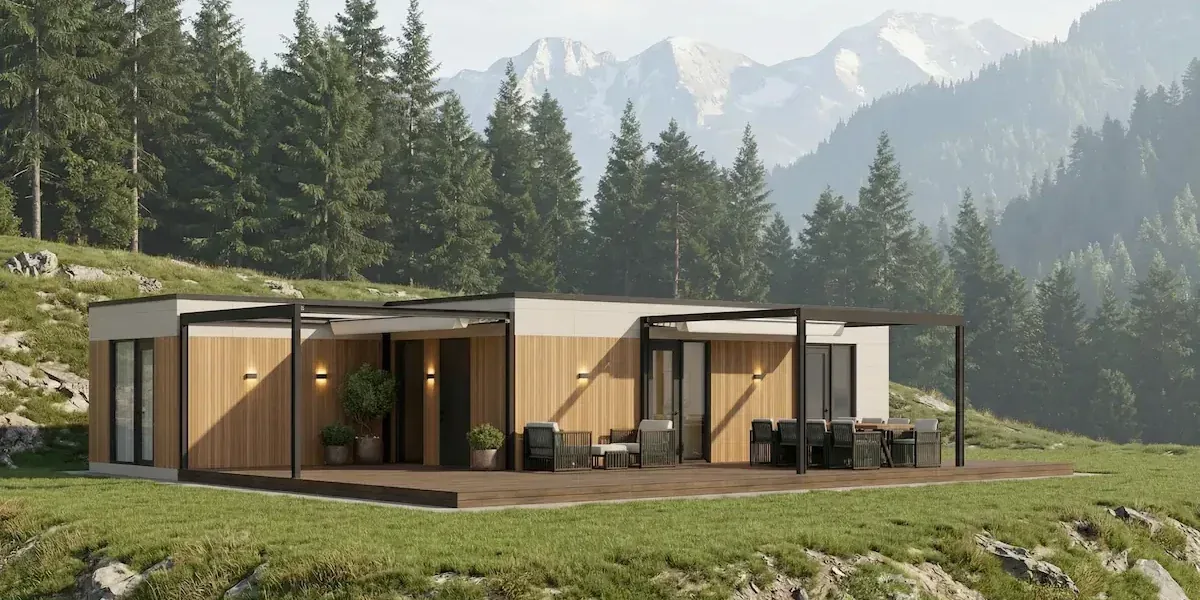
Compact units such as Delta and Sofia work well when the goal is room count and scenic privacy. Mid-size units such as Mantra or QBBQ fit family stays, longer bookings or premium zones. The site plan should separate arrival, service routes, quiet terraces and shared amenities.
Operational details that affect reviews
Guest reviews often come from basics: clean bathroom, stable temperature, easy check-in, privacy, dry paths, lighting and a place to prepare or enjoy food.
Practical hospitality scenario
A ten-key nature resort might open with six Delta rooms, two larger Mantra family units and one Swift service point. This mix lets the operator test couples, families and event bookings before adding a second phase.
Launch workflow for the operator
A practical launch workflow starts with the site story, not the house count. Map arrival, parking, paths, views, privacy, shared amenities and service routes. Then select the room mix: compact units such as Delta, scenic rooms such as Sofia, family units such as Mantra and an outdoor service point where QBBQ can create food and atmosphere.
Before opening, test one complete guest journey: booking confirmation, access code, room temperature, luggage path, shower, evening lighting, breakfast or BBQ scenario, cleaning time and check-out. If that journey works, scaling is much safer.
Comparison table
The table below gives a practical comparison lens for this topic. It is not a substitute for a site-specific quote, but it helps frame the first conversation.
| QHOME model | Area | Starting price | Best use |
|---|---|---|---|
| Delta | 26.2–38 m² + terrace | from €21,600 | permanent living |
| Sofia | 78 m² | from €46,600 | guest accommodation |
| Mantra | 104 m² | from €64,200 | glamping / hospitality |
| QBBQ | 7.2 m² | from €10,000 | outdoor revenue |
Common mistake
The common mistake is maximizing room count before designing the guest journey. A site full of Delta or Sofia units can still underperform if terraces lack privacy, cleaning routes are inefficient, check-in is unclear and there is no food, sauna, QBBQ or outdoor experience to support the nightly rate.
QHOME-specific recommendation
For hospitality, QHOME selection should be built around the guest promise: view, privacy, bed comfort, bathroom quality, self check-in and a memorable outdoor moment.
- Delta — 26.2–38 m² + terrace, from €21,600; best fit: compact scenic modular home for couples, guest accommodation and glamping projects.
- Sofia — 78 m², from €46,600; best fit: single-storey home organized around a large terrace with two bedrooms and open social zone.
- Mantra — 104 m², from €64,200; best fit: premium single-storey family home with covered terrace and integrated one-car carport.
- QBBQ — 7.2 m², from €10,000; best fit: premium outdoor kitchen for terraces, villas, restaurants, campsites and hospitality projects.
- Swift — 25.26–48 m², from €15,150; best fit: flexible line for camping or private living near the city with light architecture and simple ergonomics.
Decision checklist
- define the guest segment and nightly rate before room count
- match module type to cleaning, linen and maintenance flow
- place terraces for privacy, not just for view
- add food or outdoor-service revenue where it improves guest spend
- launch in phases when land demand is still unproven
Questions to ask before the quote
- Which QHOME models should be compared for modular homes for seaside camping, and why?
- What is included in the starting price, and what is project-specific?
- What site information is required before a reliable offer?
- Which utilities, smart systems and outdoor additions should be planned now?
- What assumptions could change delivery, installation or operating cost?
Reference notes
- QHOME.EU catalog — Product categories, areas, price ranges and scenarios.
- Grand View Research — Europe Glamping Market Outlook — European glamping growth context.
- Mordor Intelligence — Europe Prefabricated Housing Market — European prefab housing market sizing and growth context.
Frontier technology upgrades for modular homes for seaside camping in 2026
The newest and most interesting technologies for modular homes for seaside camping should be presented in three levels: available now, premium or limited, and watchlist. This keeps the article exciting without promising systems that are not yet bankable, serviceable or legal in the target country.
For an investor, the right question is whether the technology improves ADR, occupancy, OPEX, resilience or resale value. If it only looks futuristic but adds maintenance risk, it belongs in the watchlist.
What is worth mentioning now
| Technology | 2026 status | Why it is exciting | Main caution | QHOME fit |
|---|---|---|---|---|
| Smart rainwater harvesting with sensor-controlled first flush smart rainwater harvesting modular home | available / practical | Rainwater harvesting becomes more professional when tanks, first-flush diversion, filtration and level sensors are integrated with the modular project. | potable use rules vary by country | Mantra, Sofia, Alpina, Delta |
| Compact greywater recycling / MBR system greywater recycling modular home | premium / site-dependent | Greywater recycling is becoming more important as water scarcity rises; compact MBR or filtration systems can reuse shower/sink water where permitted. | health rules and local approvals vary | Mantra, Sofia, Delta, Magnum |
| Compact reverse-osmosis desalination desalination modular home | available / site-dependent | For islands and coastal projects, RO desalination can be relevant, but it is energy-, maintenance- and brine-sensitive. | brine discharge and energy demand must be handled legally | Alpina, Delta, QBBQ, Magnum |
| Tank telemetry and AI leak detection water telemetry modular home | available / practical | Remote water telemetry prevents the classic off-grid failure: a guest arrives and the tank, pump or filter has failed unnoticed. | alerts must trigger real service action | Alpina, Delta, QBBQ, Mantra |
| MOF atmospheric water harvesting atmospheric water generator modular home | emerging / watchlist | MOF-based water harvesting is one of the most futuristic water topics: it can extract moisture from air, but current serious systems are not yet a normal small-home utility item. | cost, maintenance, climate performance and water quality verification are critical | Delta, Magnum, Alpina |
Do not oversell the future
The safest editorial rule: if a technology is a pilot, lab record or infrastructure concept, describe it as a watchlist option. Do not put it into a buyer checklist until the supplier, warranty, installation route and local approval are clear.
- Smart rainwater harvesting with sensor-controlled first flush: Installing a tank without first-flush, overflow and maintenance access.
- Compact greywater recycling / MBR system: Marketing greywater as universally reusable without checking local rules and treatment level.
- Compact reverse-osmosis desalination: Treating desalination as free water because the sea is nearby.
Decision checkpoints before adding frontier tech to a quote
- Smart rainwater harvesting with sensor-controlled first flush: Design catchment, treatment, use case and legal status together.
- Compact greywater recycling / MBR system: Use greywater only with clear permitted end uses, monitoring and service plan.
- Compact reverse-osmosis desalination: Use only after water source, brine route, energy and maintenance are confirmed.
- Tank telemetry and AI leak detection: Define alarm thresholds, owner, response time and spare parts.
- Separate “available now” items from “future-ready” preparation in the article and in the commercial conversation.
- Confirm local installer availability, service response time and warranty transfer before recommending the system to a private buyer or hospitality operator.
QHOME-specific recommendation
Premium business scenario: combine Alpina or Delta guest units with smart access, water telemetry, predictive maintenance and AI pricing before adding experimental hardware. That sequence protects reviews and cash flow first.
Reference signals behind this 2026 technology layer
- European Environment Agency — Water scarcity conditions in Europe
- European Commission — Circular systems can drive reductions in city freshwater use
- AP — Desalination is a growing drinking water source
- The Guardian — MOF-based water harvesting from dry air
FAQ
Is modular homes for seaside camping profitable?
It can be profitable when land cost, ADR, occupancy, utilities, cleaning, maintenance and marketing are realistic. The strongest projects design the guest journey before buying units.
Which QHOME model is best for glamping?
Delta, Sofia and Mantra are strong starting points. Use compact units for room count and add larger or service modules when the site needs family stays or outdoor revenue.
How many units should I start with?
A phased launch is often safer: start with enough units to test demand and operations, then add more modules once occupancy and guest reviews are proven.
Do I need smart locks?
For remote or multi-unit hospitality, smart locks are highly practical because they reduce manual check-in work and support automated guest access.