
Why EU policy affects modular homes
solar ready modular home matters because energy efficiency, renewables readiness and smart controls increasingly influence building value and approval logic. Modular homes can respond well because many interfaces are planned before production. Mantra, Lumen and Alpina should be reviewed through envelope, HVAC, monitoring and future documentation.
Policy becomes product specification
Rules do not only affect paperwork. They affect insulation, glazing, solar interfaces, control systems and how energy use is explained to owners or guests.
Buyer decisions affected by regulation
For a buyer, the practical question is: what must be specified now so the home remains credible later? A model such as Delta can be future-proofed through wiring, monitoring, climate control and roof/interface planning even before a final national rule applies to the project.
Energy performance is a system
Envelope, windows, HVAC, hot water, renewables and controls should be chosen as one system, not as separate upgrades.
Practical compliance scenario
An operator planning a multi-unit glamping project can define a standard technical package for Mantra rooms: heating/cooling, monitoring, solar-ready infrastructure and documentation. That makes expansion easier and reduces one-off compliance work.
Future-proof specification workflow
The future-proof specification workflow starts with energy documentation assumptions. Define envelope performance, HVAC concept, hot-water strategy, ventilation, monitoring, solar-ready interfaces and smart controls before final configuration. Then decide what evidence the buyer, operator or local authority may request later.
For models such as Mantra, Lumen and Alpina, the advantage of modular production is repeatability: once a technical package is defined, it can be reused across phases, making documentation and maintenance more consistent.
Policy impact table
The table below gives a practical comparison lens for this topic. It is not a substitute for a site-specific quote, but it helps frame the first conversation.
| QHOME model | Area | Starting price | Best use |
|---|---|---|---|
| Mantra | 104 m² | from €64,200 | permanent living |
| Lumen | 90.19 m² | from €54,110 | guest accommodation |
| Alpina | 29.11 m² | from €59,800 | glamping / hospitality |
| Delta | 26.2–38 m² + terrace | from €21,600 | outdoor revenue |
Common mistake
The common mistake is reading EU policy as distant regulation. Energy performance, smart readiness and solar readiness affect product choices now: glazing, HVAC, wiring, monitoring and roof/interface planning. A model like Mantra should be specified with future documentation in mind.
QHOME-specific recommendation
For this topic, QHOME models should be compared by scenario rather than by size alone. The right unit is the one that reduces project risk and matches daily use.
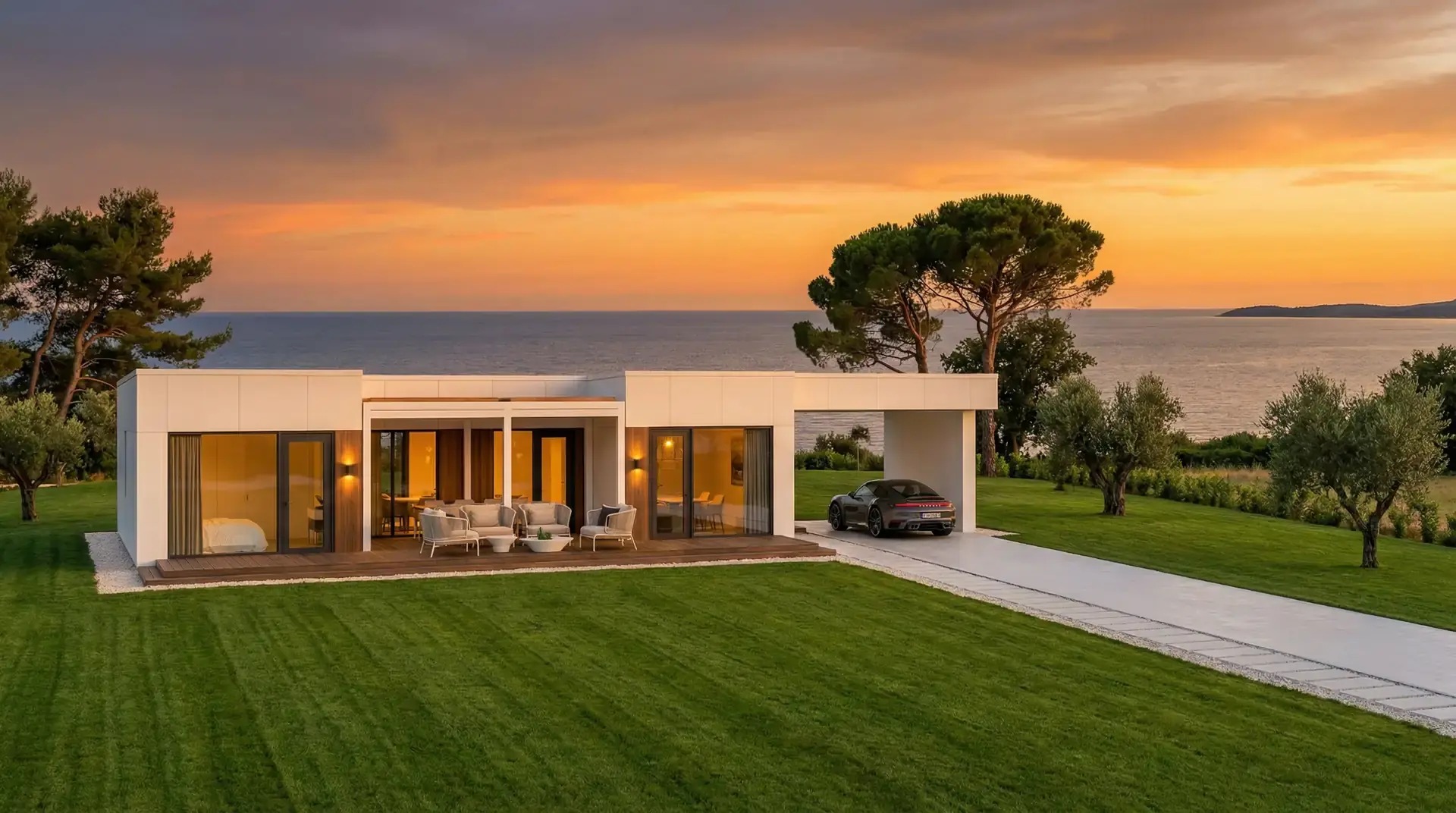
- Mantra — 104 m², from €64,200; best fit: premium single-storey family home with covered terrace and integrated one-car carport.
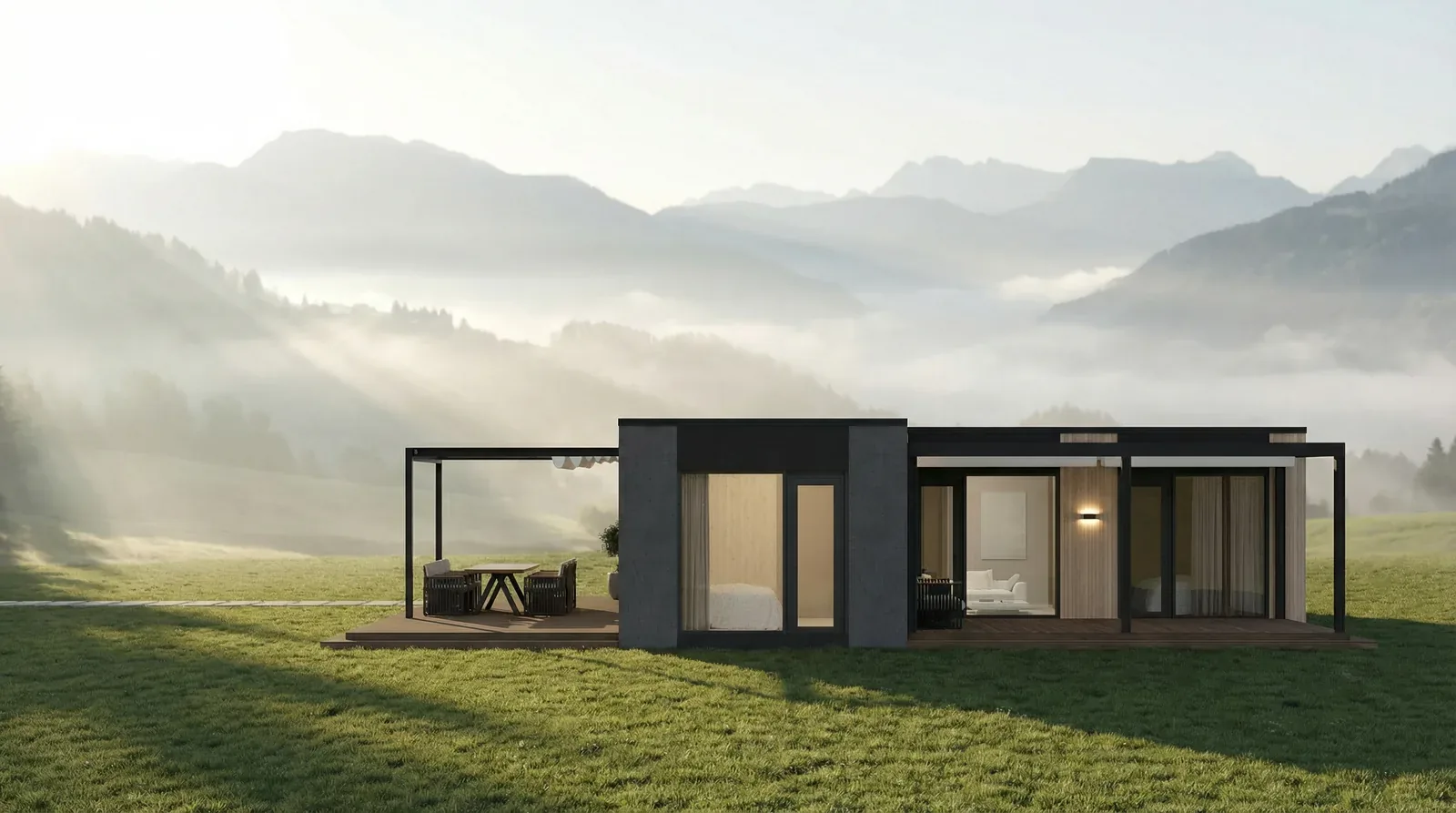
- Lumen — 90.19 m², from €54,110; best fit: restrained modular solution with timber slats, fiber-cement panels and efficient permanent-living layout.
- Alpina — 29.11 m², from €59,800; best fit: turnkey micro-chalet for glamping and hotel-room use with panoramic lounge and GearBox.
- Delta — 26.2–38 m² + terrace, from €21,600; best fit: compact scenic modular home for couples, guest accommodation and glamping projects.
- Magnum — 52.54 m², from €26,910; best fit: revenue-ready modular home with panoramic end glazing and autonomous systems.
Decision checklist
- request energy-performance assumptions before choosing glazing and HVAC
- treat solar readiness as a design interface, not an afterthought
- document smart controls that affect comfort, flexibility and energy use
- plan future EPC or national energy documentation early
- avoid fossil-fuel dependency where local rules and incentives are moving away from it
Questions to ask before the quote
- Which QHOME models should be compared for solar ready modular home, and why?
- What is included in the starting price, and what is project-specific?
- What site information is required before a reliable offer?
- Which utilities, smart systems and outdoor additions should be planned now?
- What assumptions could change delivery, installation or operating cost?
Reference notes
- QHOME.EU catalog — Product categories, areas, price ranges and scenarios.
- European Commission — Energy Performance of Buildings Directive — EU building energy performance context.
- European Commission — Smart Readiness Indicator — Smart building readiness context.
Frontier technology upgrades for solar ready modular home in 2026
The newest and most interesting technologies for solar ready modular home should be presented in three levels: available now, premium or limited, and watchlist. This keeps the article exciting without promising systems that are not yet bankable, serviceable or legal in the target country.
For a glamping operator, the strongest frontier technologies are not the most exotic ones; they are the systems that reduce complaints, automate service alerts and keep guest units comfortable when the site is full.
What is worth mentioning now
| Technology | 2026 status | Why it is exciting | Main caution | QHOME fit |
|---|---|---|---|---|
| Perovskite-silicon tandem PV perovskite tandem solar panels modular home | pilot / premium watchlist | Tandem PV is one of the biggest solar efficiency stories because it stacks a perovskite absorber above silicon to capture more of the solar spectrum. | durability, bankability, warranty and real module availability must be checked | Mantra, Lumen, Zephyr, Element |
| N-type TOPCon high-efficiency PV TOPCon solar panels modular home | available now / practical premium | TOPCon is a realistic high-performance solar option today: less speculative than tandem PV and easier to specify for rooftops or carports. | roof orientation, shading, wind uplift and warranty details matter more than label hype | Mantra, Lumen, Element, Delta |
| Building-integrated photovoltaic roof and façade BIPV modular home | premium / limited availability | BIPV turns the building skin into a power-generating surface, useful when aesthetics matter as much as energy. | higher cost and repair complexity than conventional panels | Mantra, Zephyr, Lumen, Forza |
| AI solar forecasting and predictive energy control AI solar energy management modular home | available now / software-led | The “cool” part is not only hardware: AI forecasting can schedule battery charging, heating, cooling, EV charging and hot water around weather and tariff signals. | bad sensors and poor commissioning make AI useless | Mantra, Lumen, Zephyr, Alpina |
| Solar-ready roof, conduit and structural reserve solar ready modular home 2026 | available now / should be standard | Solar-ready design is becoming a core EU-facing topic because roofs, conduits, inverter space and structural loading are cheaper to prepare in the factory than retrofit later. | solar-ready is not the same as installed solar | Mantra, Lumen, Element, Alpina |
Do not oversell the future
The safest editorial rule: if a technology is a pilot, lab record or infrastructure concept, describe it as a watchlist option. Do not put it into a buyer checklist until the supplier, warranty, installation route and local approval are clear.
- Perovskite-silicon tandem PV: Writing as if lab-cell record efficiency equals what the buyer can order tomorrow.
- N-type TOPCon high-efficiency PV: Selecting panels by wattage only while ignoring roof geometry and summer heat derating.
- Building-integrated photovoltaic roof and façade: Treating BIPV as decoration and forgetting replacement, waterproofing and access.
Decision checkpoints before adding frontier tech to a quote
- Perovskite-silicon tandem PV: Use as a “watchlist” upgrade unless a bankable module supplier and warranty are confirmed.
- N-type TOPCon high-efficiency PV: Specify roof area, orientation, mounting, inverter and battery together.
- Building-integrated photovoltaic roof and façade: Choose BIPV only when architecture, planning visibility or premium branding justifies the cost.
- AI solar forecasting and predictive energy control: Use AI only when PV, battery, HVAC and water heating can actually be controlled.
- Separate “available now” items from “future-ready” preparation in the article and in the commercial conversation.
- Confirm local installer availability, service response time and warranty transfer before recommending the system to a private buyer or hospitality operator.
QHOME-specific recommendation
QHOME scenario: start with the model and use case, then select the frontier package. Mantra, Lumen, Zephyr, Element, Delta, Alpina can support different levels of technology, but the quote should separate available-now systems from premium-limited and watchlist options.
Reference signals behind this 2026 technology layer
- NREL Best Research-Cell Efficiencies chart, revised 2026-03-19
- LONGi 34.85% silicon-perovskite tandem record, NREL certified
- European Commission — Solar energy in buildings
- IEA Global Energy Review 2026 — Battery storage
- Connectivity Standards Alliance — Matter
- European Commission — Energy Performance of Buildings Directive
FAQ
Why does solar ready modular home matter for buyers?
It affects future-proofing: energy documentation, solar readiness, smart controls, low-emission operation and the long-term value of the modular home.
Which QHOME models should be reviewed for energy performance?
All models should be reviewed, but Mantra, Lumen and Alpina are useful examples because comfort, glazing, heating and smart controls matter strongly in their scenarios.
Is solar readiness mandatory everywhere?
Requirements depend on national transposition and building type. Buyers should treat solar readiness as a design advantage even where the exact rule is still local.
What is Smart Readiness Indicator in simple terms?
It is an EU framework for assessing how well a building can use smart technologies to improve comfort, efficiency and interaction with energy systems.
Should policy affect model choice?
Yes. Policy affects insulation, HVAC, monitoring, renewables, documentation and future resale or rental positioning.